

ConcertAI is using AI built with NVIDIA technologies to assess clinical trial eligibility across its CancerLinQ oncology network, helping more patients with cancer reach clinical research.
“If you’re a pancreatic cancer patient right now and you want the best standard of care, the primary way you’re going to get it is through clinical trials.” — Shaalan Beg, M.D., Chief Medical Officer of Oncology at ConcertAI
Picture a patient with a difficult cancer whose standard treatments have stopped working. For that patient, a clinical trial can offer a lifeline, with access to a therapy that may not yet be available anywhere else.
The patient may already qualify for an open trial, and identifying the right one takes time that busy care teams rarely have. Much of that time goes to assessing whether a patient’s clinical factors meet a trial’s eligibility requirements. By automating that assessment, AI is helping to close the gap between a trial that exists and the patient it could help.
Trial enrollment shows what AI can do in cancer care: technology that broadens the options available to patients, operates beyond the limits of manual review and keeps the treatment decision in the clinician’s hands.
How AI can help more patients benefit from clinical research
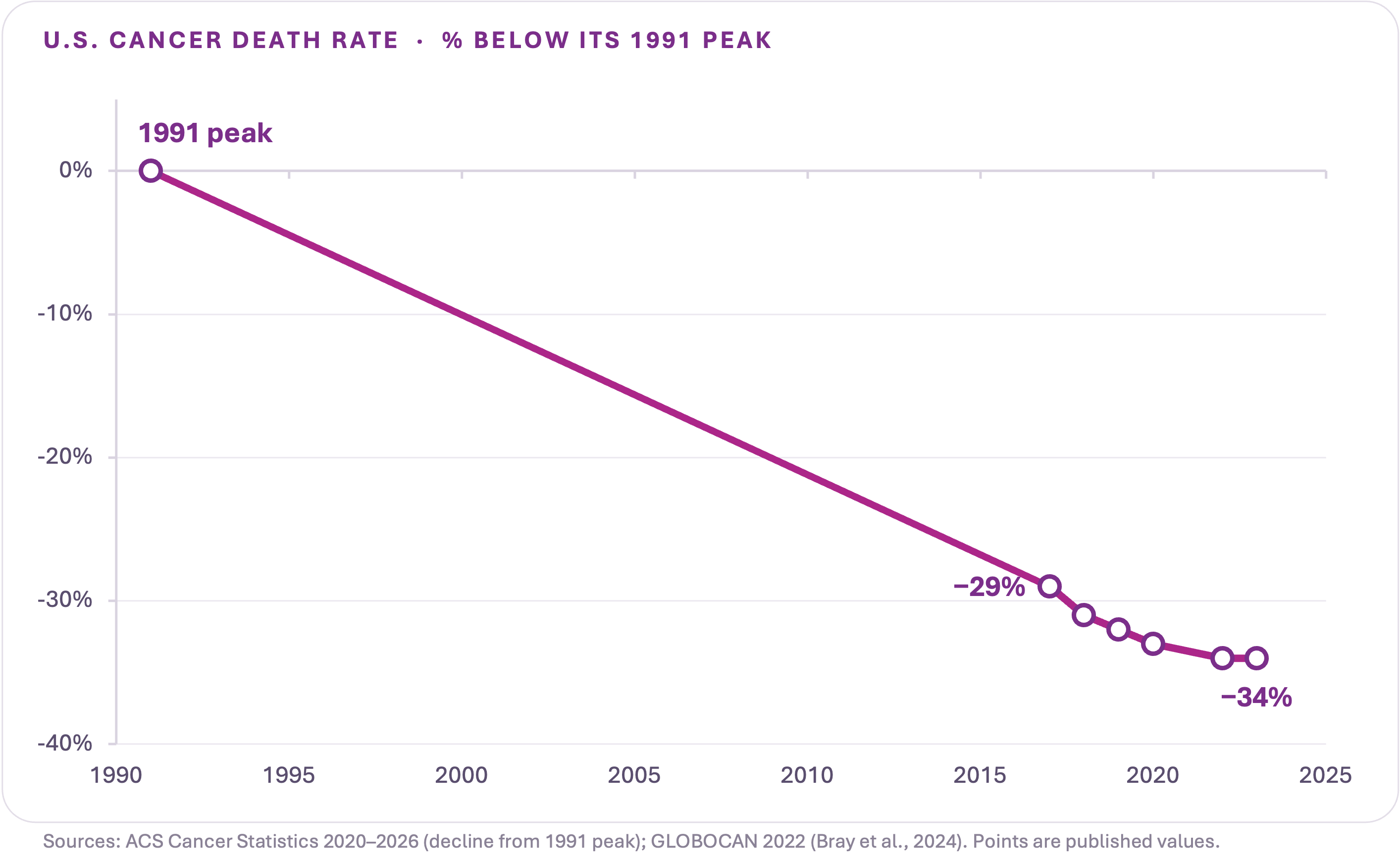
Cancer touches more people every year, with around 20 million new cases diagnosed globally and the number still climbing. At the same time, the U.S. cancer death rate has fallen 34% since its 1991 peak, and five-year survival reached 70% for people diagnosed between 2015 and 2021.
That progress depends largely on data and research that keep becoming more refined and power novel treatments and discovery forward. Clinical trials are one of the ways that research gets proven, and much of today’s standard of care were first established in a trial.
“We use a chain of AI models and agents to parse all that information, understand really challenging concepts like progression, or timelines within a diagnosis journey, and summarize that into a structured data model that can be queried from our SaaS software stack.” — Eron Kelly, CEO of ConcertAI
Matching a patient to the right trial means working with some of the most complex data in medicine, at a time when the standard of care can shift within months. New therapies, biomarkers and guidelines arrive often, and each one can change which patients a trial is looking for.
That makes oncology a proving ground for AI, and trial matching a direct test of whether it can turn the immense volume of patient data into earlier insight, more confident decisions and better patient outcomes.
Patients are ready for the trial conversation
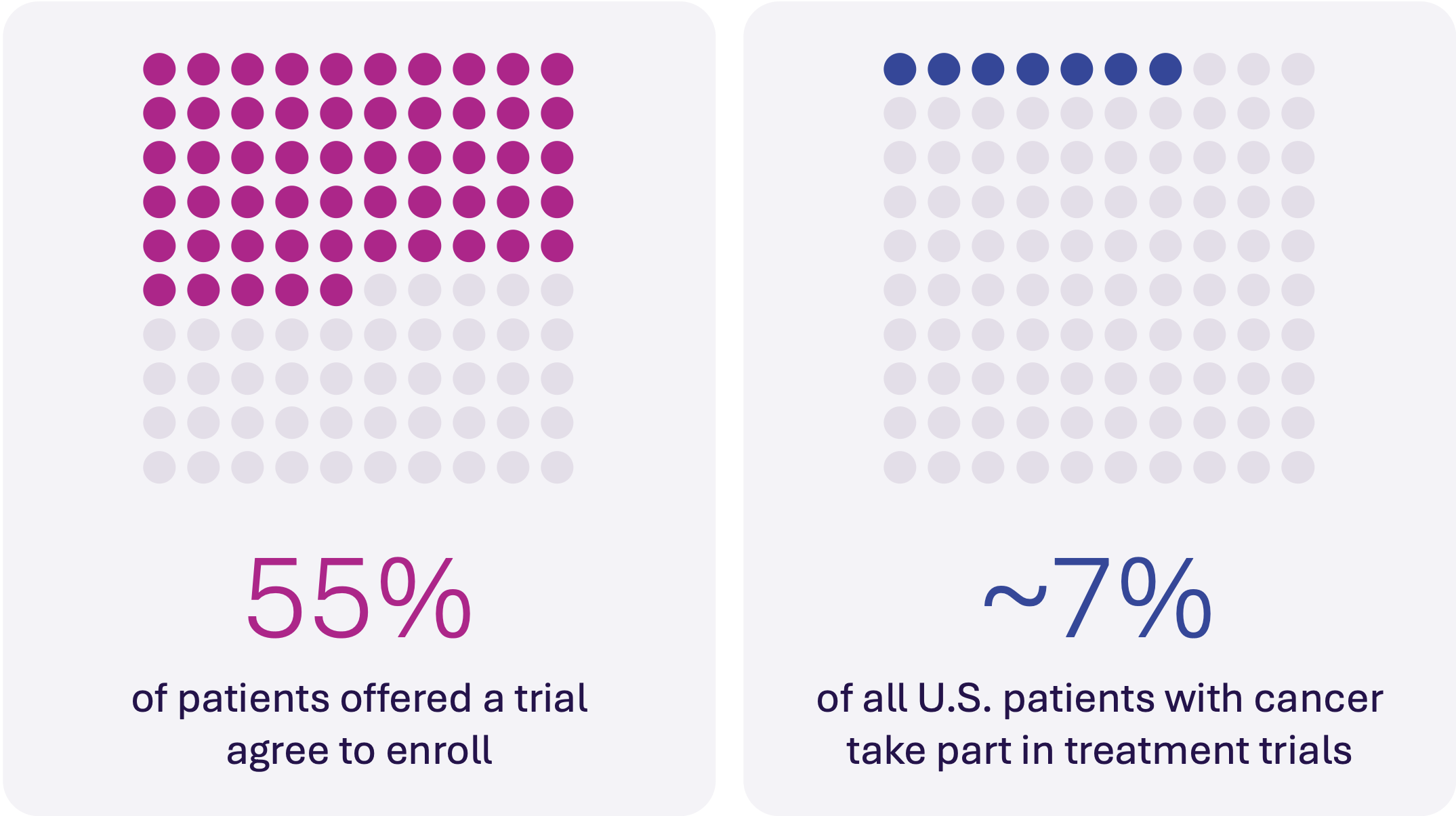
Many patients are willing to join a trial when asked, with 55% of those offered one agreeing to enroll. In practice, about 7% of all patients with cancer in the U.S. take part in treatment trials.
That gap points to a problem of access.
A patient can’t say yes to a trial that is never offered. Fortunately, this offers a direct opportunity where technology can help bridge process gaps.
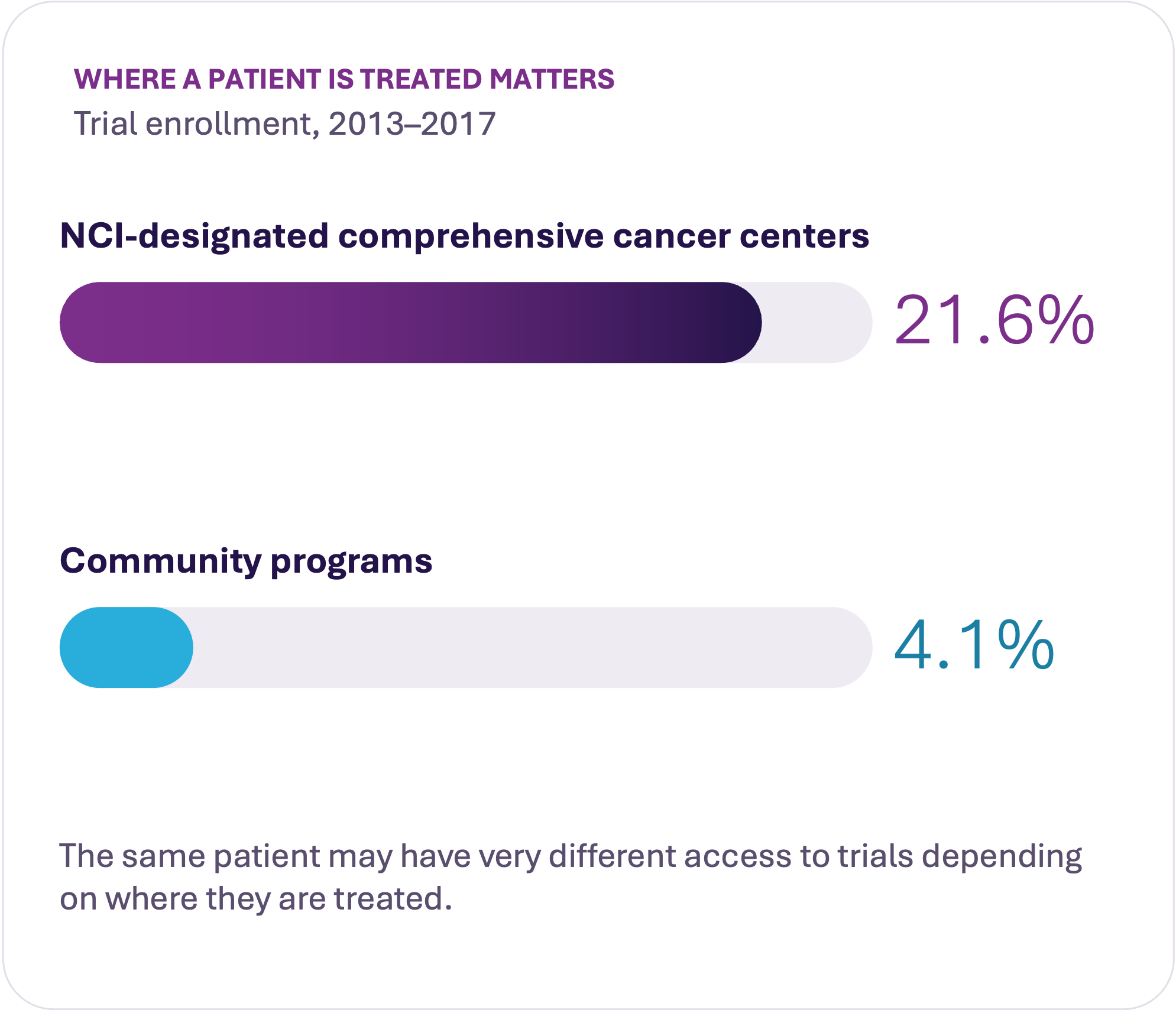
Where a patient is treated influences access as well. Between 2013 and 2017, enrollment reached 21.6% at NCI-designated comprehensive cancer centers and 4.1% at community programs.
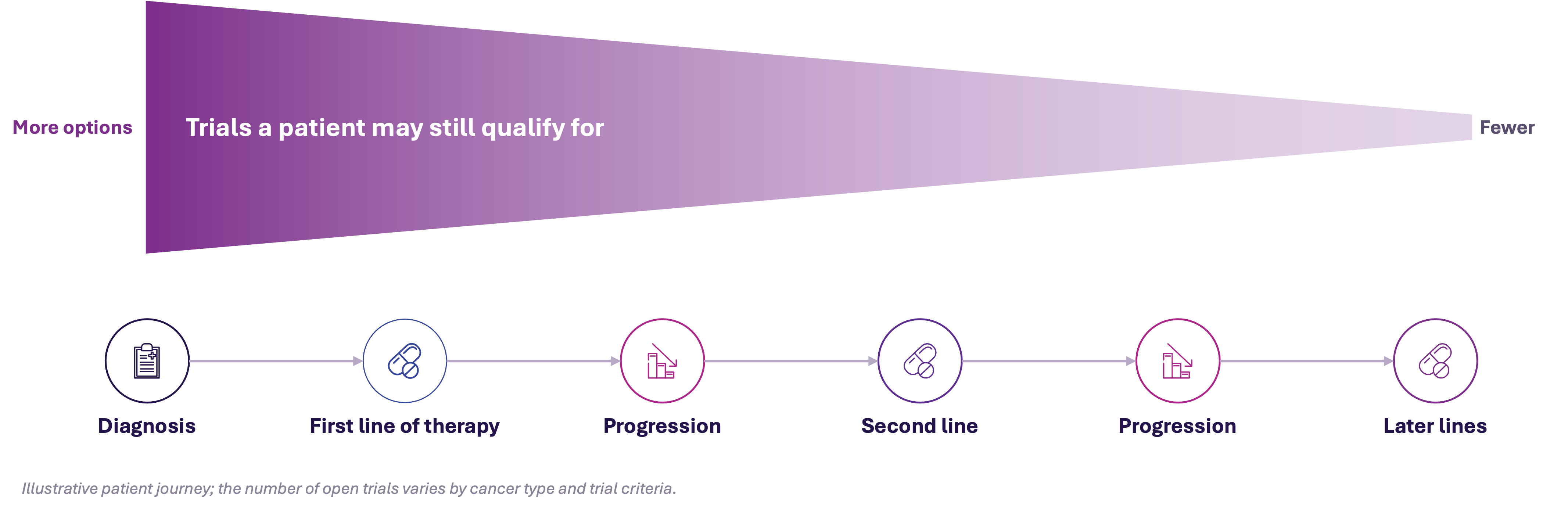
Time adds another constraint. As a patient progresses, the window for a given trial narrows, and prompt matching keeps a path forward open. Many trials limit how many prior treatments a patient can have received, so a match found months late may come too late.
Trial matching begins with a complete view of the patient
Whether a patient qualifies depends on line of therapy, progression, recurrence and biomarker profile, and many of those details sit in unstructured notes and reports.
A single trial might require that a patient’s cancer has progressed after one prior therapy, carries a specific genomic alteration and has not received a certain class of drug. Confirming each criterion by hand can mean reading through months or years of records.
A complete view of a patient means combining and making sense of all of those sources.
Further complicating this challenge is that the information itself is spread across physician notes, pathology reports and genomic test results, produced in different electronic health record and laboratory systems. A complete view of a patient means combining and making sense of all of those sources.
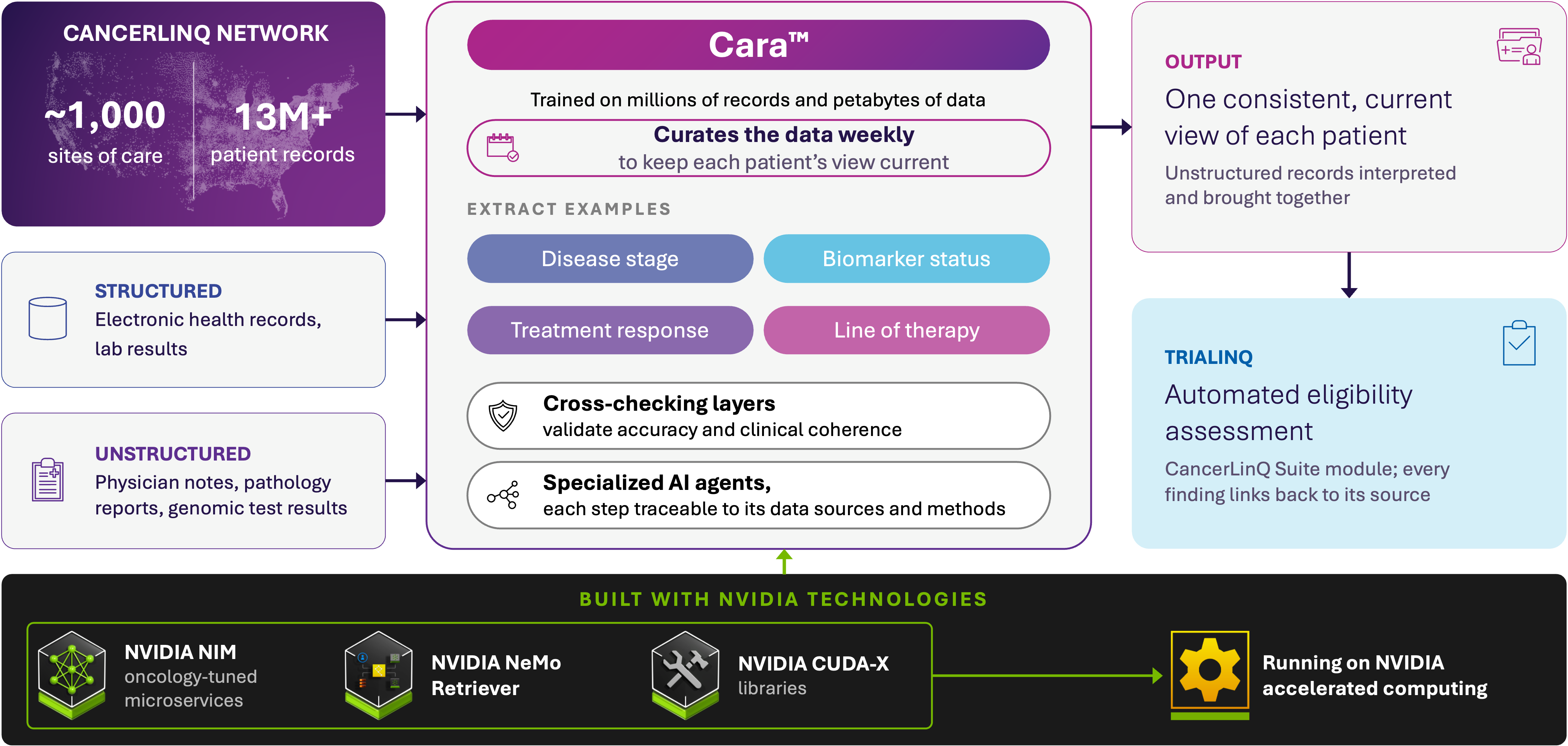
Through our work with NVIDIA, we’ve proven that AI trained on oncology-specific data can take on that task, interpreting unstructured records and bringing them together into one consistent view of each patient.
This approach is reflected at ConcertAI, which owns and operates the CancerLinQ network. The network connects longitudinal oncology data from nearly 1000 sites of care, spanning more than 13 million patient records.
Cara, ConcertAI’s proprietary AI engine, curates that data weekly and extracts disease stage, biomarker status, treatment response and line of therapy, with cross-checking layers that validate accuracy and clinical coherence. Weekly curation keeps each patient’s view current. Cara is trained on millions of patient records and petabytes of data to ensure it understands both healthcare data as well as its context, for both structured health records (like electronic health records or lab results) and unstructured data (like physician notes).
The platform is built with NVIDIA technologies, including oncology-tuned NVIDIA NIM™ microservices, NVIDIA NeMo™ Retriever and NVIDIA CUDA-X™ libraries, running on NVIDIA accelerated computing. This allows ConcertAI to leverage NVIDIA technology to coordinate specialized AI agents, with each step traceable to its data sources and methods.
AI can ease the burden on providers
3.3×
faster than manual methods
50%
higher clinical trial enrollment
Enrolling and caring for patients on trials takes time and clinic resources, which can make trials harder for practices to offer. Screening a single patient can mean reviewing dozens of documents against a long list of inclusion and exclusion criteria, often by staff who are already stretched thin.
Automating the eligibility assessment gives time back to care teams and gets patients to the right trial sooner. Instead of searching charts, staff can focus on confirming likely matches and talking with patients.
For example, TriaLinQ, a module of the CancerLinQ Suite, automates the assessment of the clinical factors that determine eligibility. This helps screen eligible patients 3.3 times faster than manual methods, and workflow integration supports up to 50% higher clinical trial enrollment.
Each match moves the research closer to an answer and helps treatments for future patients arrive sooner.
Trials that enroll slowly take longer to produce answers. When a trial can’t find enough patients, it may close early or run longer than planned, delaying results for everyone waiting on them. Each match moves the research closer to an answer and helps treatments for future patients arrive sooner.
Technology that supports the decision, with clinicians in charge
“The promise of technology in oncology isn’t measured by how sophisticated the platform is, but instead by whether it meaningfully supports the clinicians delivering care and positively impacts patient outcomes. That's the standard we hold ourselves to: AI that earns its place at the bedside.” — Shaalan Beg, M.D.
We’ve intentionally designed our AI tools to support trust with the clinical community. Every eligibility finding links back to its source in the patient record, and each step the AI takes is traceable to the data and methods behind it. A care team can see why a patient was flagged before acting on it.
Treatment decisions remain with the oncologist, and human review continues wherever judgment is required. AI handles the first pass across thousands of records. The oncologist decides what fits the patient in front of them.
“We’re not working under the assumption that these tools will autonomously care for patients,” Beg said.
AI handles the first pass across thousands of records. The oncologist decides what fits the patient in front of them.
The measure of AI in oncology is whether more patients learn of more treatment options at a point when those options can still make a difference. Trial enrollment meets that test. It expands what patients can receive, at a scale human effort alone cannot reach, with clinicians accountable for the decision.
With clinicians guiding each decision, AI moves cancer care closer to the goal that no one gets left behind.
Continue exploring clinical trial intelligence: Learn more about TriaLinQ
Learn more about CancerLinQ