01
0
Million



In healthcare, decisions must stand up under scrutiny in real-world settings. Some companies build tools. We build connections, unifying clinical expertise, real-world data, and applied AI to deliver practical intelligence teams can trust.
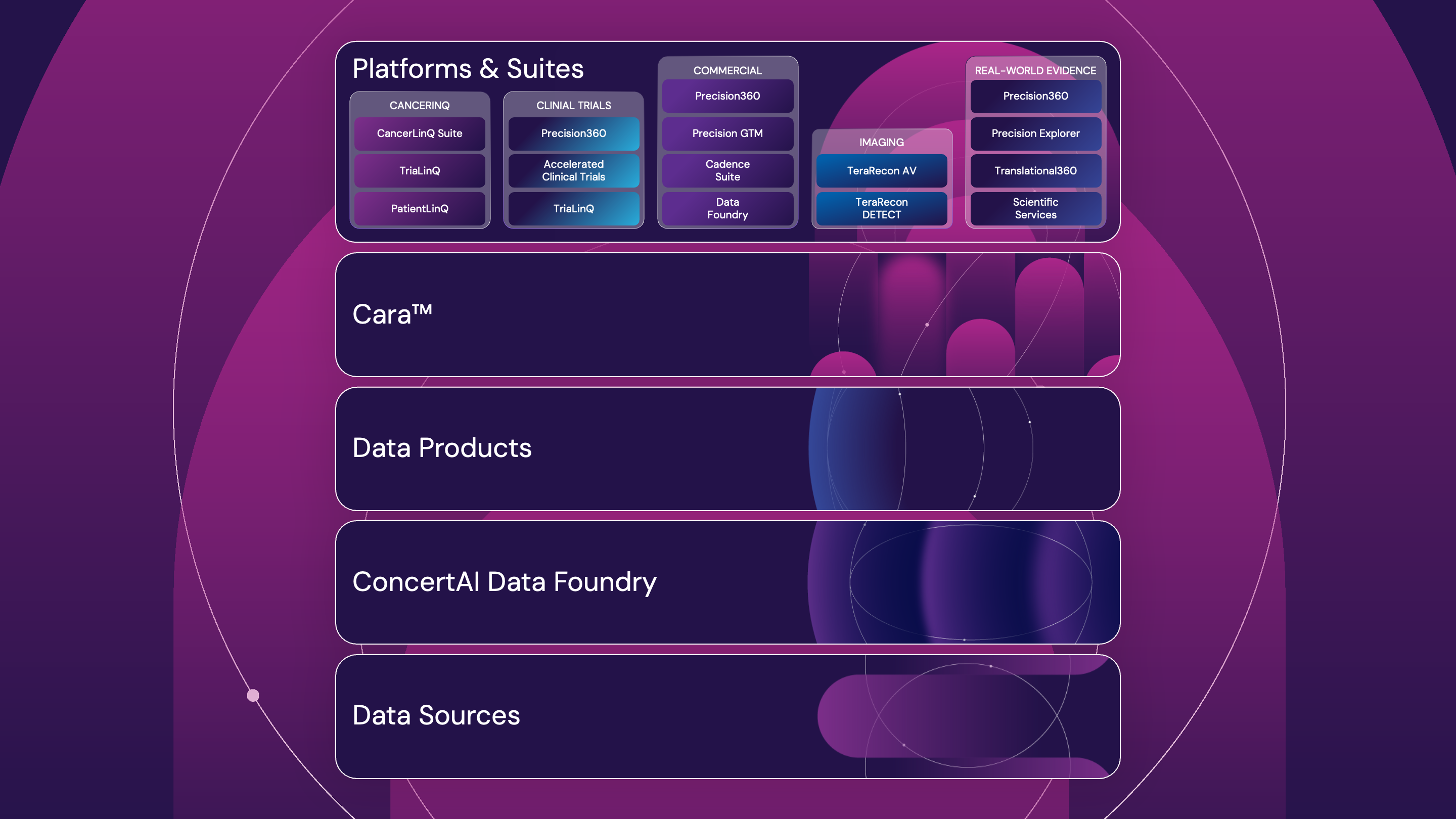
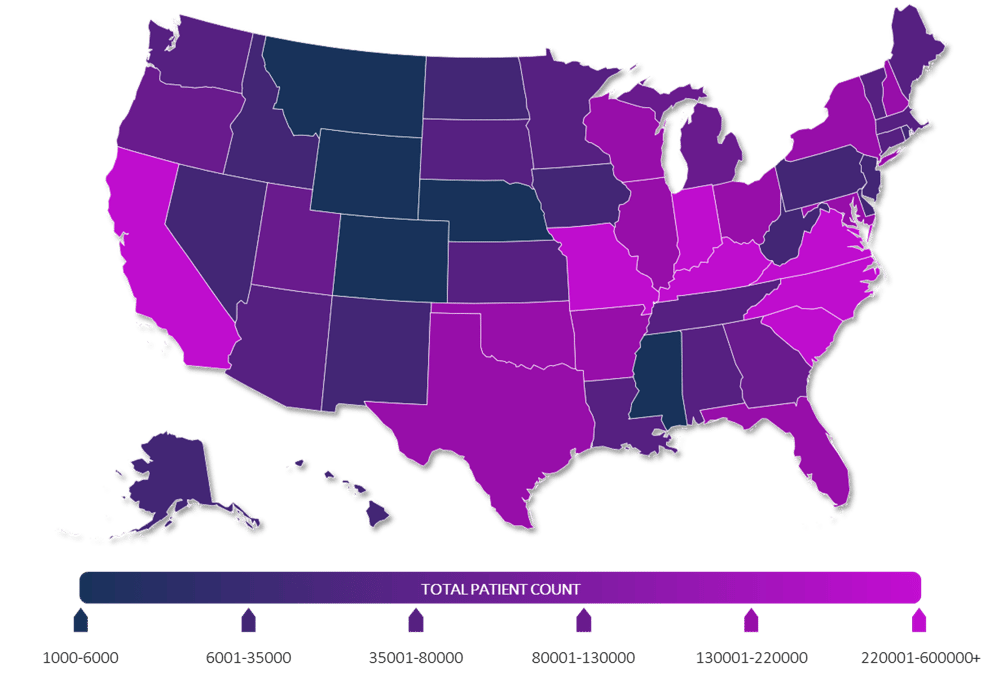
ConcertAI connects longitudinal clinical and genomic data across nearly 1000 oncology sites in the CancerLinQ network, creating a depth of intelligence no single organization or isolated dataset could produce alone. This allows us to offer a high degree of clinical breadth, depth, and diversity, including patient representation from all 50 states, a roughly equal mix of academic medical centers, community centers, and large systems, and patient history stretching back as far as 10 years in some cases.
Impact at scale
Sticky steps keep each statistic in focus as the user scrolls to the next one.
Cara is ConcertAI's proprietary AI engine. Cara knows healthcare data and how to translate it into enterprise-wide value for healthcare and life sciences organizations. Trained on millions of human-curated clinical records and petabytes of data, Cara knows how to:
ConcertAI works with leading technology partners including NVIDIA and AWS, to help power scalable, secure intelligence infrastructure built for the demands of healthcare and life sciences.

We collaborate with leading laboratory partners including Caris, Guardant, Foundation Medicine, and NeoGenomics to integrate deep genomic and molecular insights into real-world clinical intelligence.


Request a demo
Talk with our team about how AI, real-world data, and workflow-aligned products can support research, operations, and treatment.
Share a few details and we will route you to the right specialist.
ConcertAI connects longitudinal clinical and genomic data across providers, partners, and settings, creating ConcertAI creates a depth of intelligence no single organization or isolated dataset could produce alone.
Our datasets are built through long-standing partnerships with healthcare providers, medical societies, and genomics organizations, linking clinical and molecular data over time. This enables teams to understand patient populations, disease progression, and treatment patterns with greater precision.
Impact at scale
Sticky steps keep each statistic in focus as the user scrolls to the next one.